Recently, I watched the Danish film “Another Round” (Danish: Druk). At some point the main character, a school teacher, played by Mads Mikkelsen, is at school and gives his middle-school students a test on selecting a candidate in a hypothetical election, based solely on the characteristics of the people in question. After the students’ final desicion, the teacher shows the actual people that he was describing and the result awed them. Though this article is not going to be a movie review, it is fascinating to look beyond the actual script and understand the psychological gears that can affect us all as Humans, without even realizing it.
Teacher: We’re having a test today. There’s an election with three candidates.
Number 1: He is partially paralyzed from polio. He has hypertension. He’s anemic and suffers from an array of serious illnesses. He cheats on his wife, chain-smokes and drinks too many martinis.
Number 2: He’s overweight and he’s already lost three elections. He’s had a depression and two heart attacks. And every night he goes to bed, he drinks incredible amounts of champagne, cognac, port, whisky and adds two sleeping pills before dozing off.
Number 3: He’s a highly decorated war hero. He treats women with respect. He loves animals, never smokes and only has a beer on rare occasions.
Who do you vote for?
/All students answer unanimously the 3rd candidate./
Teacher: You just discarded: Franklin D. Roosevelt and Winston L. Churchill and you have thankfully elected this guy – Adolf Hitler.
The course ends with the teacher’s phrase “The world is never as you expect”.
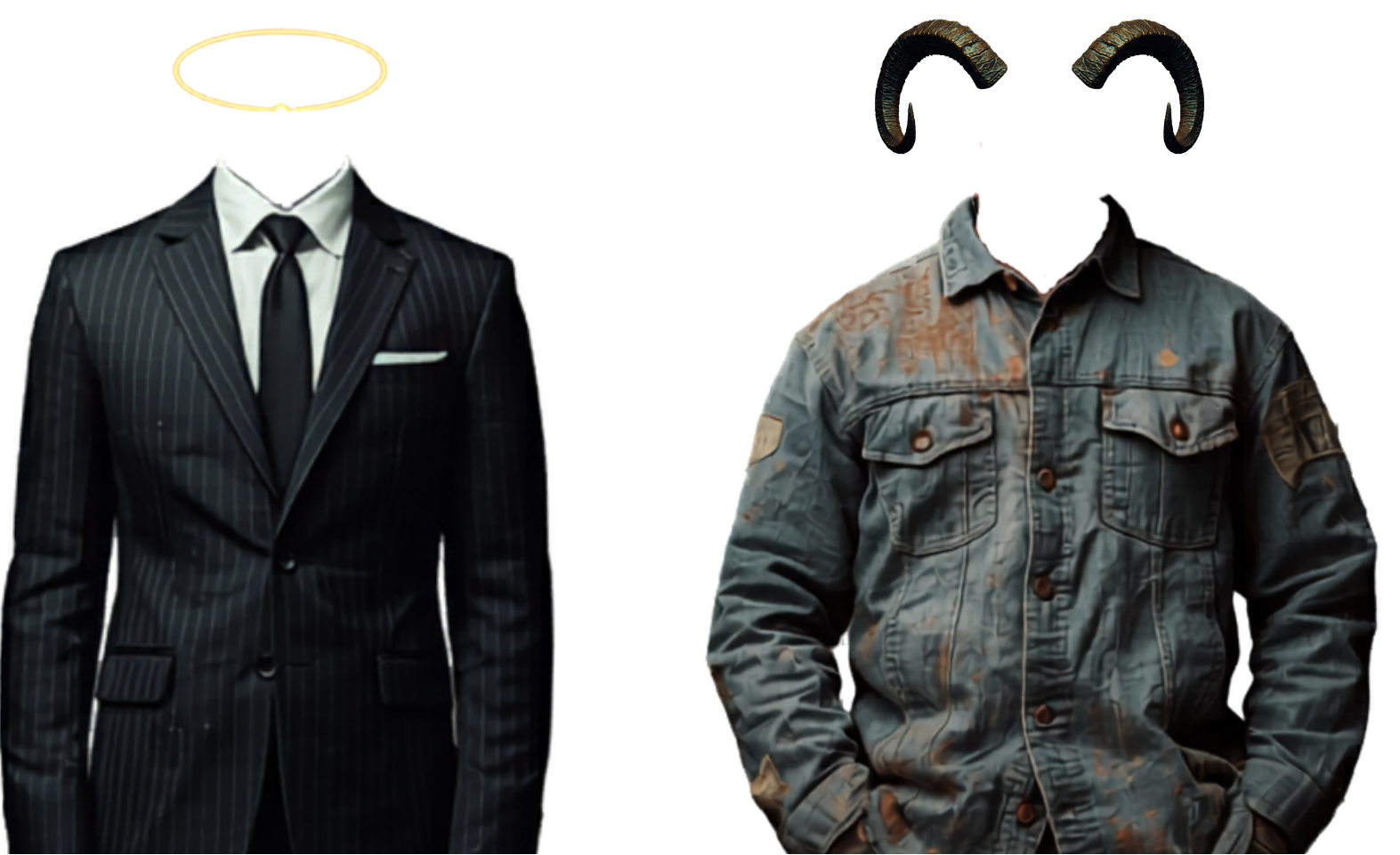
Let us introduce the infamous “Halo effect” that will nudge us today. I will not bore you with the scientific details, but all you need to know is that this effect refers to how people perceive others based on how they look and behave. Everyone knows the phrase “Image is everything”. Would you trust someone with your money who was in a polished suit, was confident and had a warm smile or someone dressed in rags, uncertain and grumpy? When someone has the socially acceptable traits, people usually consider them to have a “halo” above their heads (or “horns” on the other occasion) and will be more prone to believe or follow them. But statistically speaking most financial crimes have been conducted by people in suits that were considered beyond suspicion. More than 40,000 people across 127 countries were affected by the “Financial Guru” Bernie Maddoff and his Ponzi scheme. And you need not to go that far. In a society, a heinous crime conducted by a person outside the society’s norms will not create the same noise as by a “respected” person.
During the COVID era the “Halo effect” took a mild hit as people could not view their counterparts’ facial expressions and body language and the “stay at home” condition changed how people would get dressed. Nonetheless, after 2022, we have been back on track and the effect has again rose to its’ previous glory.
But don’t get me wrong. The effect is not an enemy, to put at the stake. Looks in the cultural sense are a way to show respect to others as one respect themselves. It is a form of discipline. Scientifically speaking, it is hardwired into our DNA as a means of protection and vulnerability. When meeting a new person, it takes us an average of a tenth of a second to categorize them as a potential threat (2021, McElvaney et al.). Of course, after we get to know them better, our view might change, but let’s not go there. The bad news is that escaping this bias is almost impossible, no matter how intellectually superior we may consider ourselves to be. However, the good news is that by starting to point out these little nudges in ourselves, next time, hopefully, we will not jump, that quickly, to conclusions.
My final mark is this; We all think that we are smarter than simple nudges and that we would not fall prey to them, but I assure you that even the ones studying them cannot survive a good nudge. However, I am optimistic that by pointing them out to you the readers, I will have helped you create a “thicker skin” and that you won’t be that easily affected the next time you catch yourselves doing it.
So, after reading this article would you perhaps change your answer to the teacher’s question?
Leave a Reply