
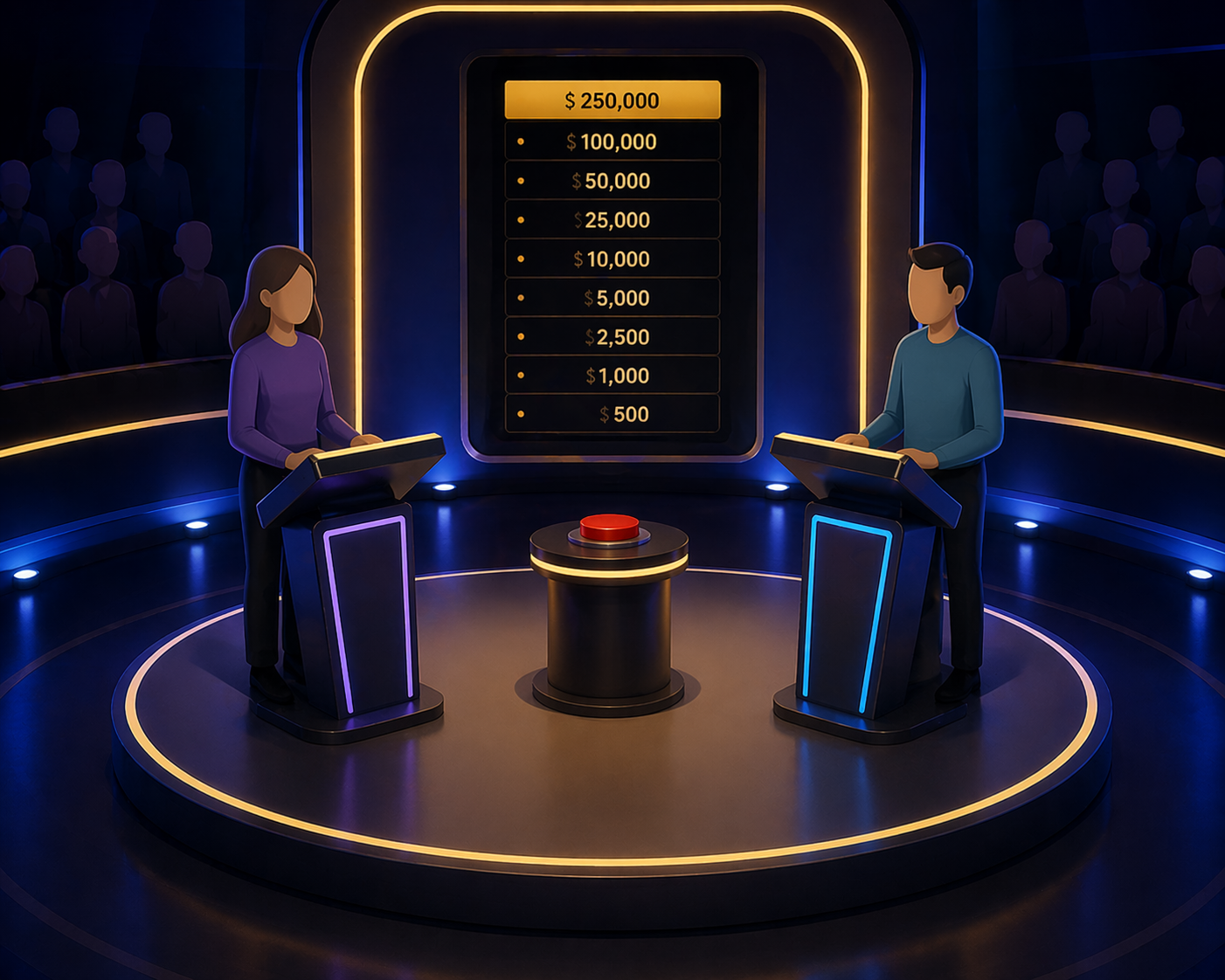
Around the world, in many countries, there is a high likelihood that at least one television game show exists in which contestants, one way or another, try to win as much money as possible. Among the most notable are “Deal or No Deal” and “Who Wants to Be a Millionaire?”. In each episode, the contestant goes up against the “house,” if we use gambling parlance. It is interesting to observe that once they make a wrong choice that leads them away from the optimal outcome, everyone—even the viewers—is devastated. This is because, as Kahneman and Tversky have noted, people tend to feel losses about twice as strongly as gains. However, we will focus on that bias another time.
Our main point of discussion for now is “Mental Accounting”. The basic concept is that people tend to categorize money in different ways rather than consider it fully fungible, which is often influenced by its intended use. This, in turn, leads them to make irrational financial decisions (Thaler et al., 2008). In these game shows, when a contestant starts playing, they usually already have a target amount in mind that they hope to win. However, it is likely that once they reach that milestone, they feel more compelled to continue—of course, within the limits of their risk tolerance.
Subconsciously, this happens because, in some sense, they believe that any additional gain or loss does not truly affect their overall wealth, as they perceive themselves to be gambling with “house money.” As Thaler has pointed out, it is common for casino gamblers to place their original capital in one pocket and any winnings in another, treating the gains as somehow different from their initial funds.
However, the situation in casinos is not the same as in these game shows. None of the amounts offered were previously in the contestant’s possession, not even the imaginary milestone. Therefore, even the smallest amount should be considered a net gain. Of course, everyone plays to win big, but emotions often cloud judgment and overwhelm people, either positively or negatively.
A game is a game, and even if it involves luck or chance, every final outcome should, in principle, have the same impact. Saying things like “I should have known that answer” or “I should have guessed better” is futile, as such hindsight bias may lead to self-pity without affecting the actual outcome.
My final suggestion is that in cases like these television games, people should simply try to enjoy themselves as much as possible. After all, none of this existed yesterday, and a win—big or small—is always a win, while a “loss” never truly existed in the first place.
Leave a Reply